Honoring a Legacy of Avalanche Forecasting in the Pacific Northwest
The 2025-26 season marks a tremendous milestone for the Northwest Avalanche Center—50 years of operation—serving the Pacific Northwest with science-based avalanche forecasting, community-centered education, and an unshakable dedication to public safety. What began as a handful of passionate scientists working out of the University of Washington has evolved into a nationally respected avalanche center. This is the story of NWAC: how a few visionaries, a mountain of challenges, and some chewing gum and beer cans created one of the most trusted names in mountain weather and avalanche forecasting.
The Early Days: A growing need for avalanche forecasting
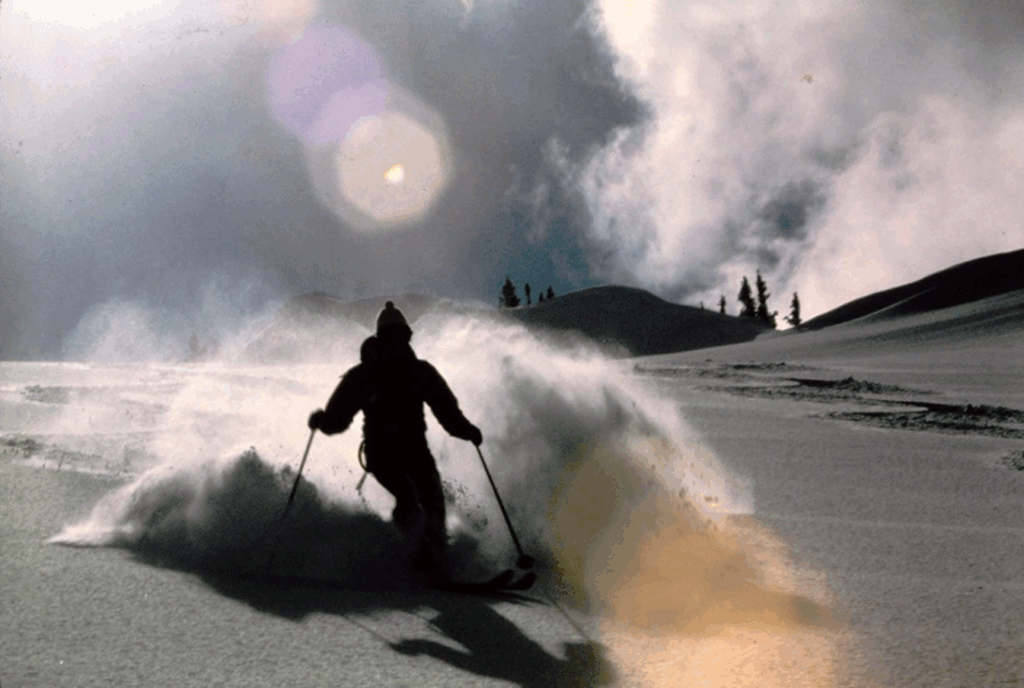
In the 1970s, the growing popularity of winter recreation in the mountains led to increased avalanche fatalities in the western U.S., from an average of 7 per year to more than 20. Although avalanche control programs and safety education expanded, public exposure continued to climb.
It was during this time that Paul Frankenstein of the Forest Service (Snoqualmie National Forest) and Frank “Bud” Reanier of the National Weather Service (Seattle) began issuing rudimentary avalanche warnings when conditions were especially dangerous. But there was no formal forecasting system in place. That changed in the early 1970s, when Ken White of the Forest Service launched the first avalanche hotline in the Northwest—442-SNOW, serving the Snoqualmie Pass area. This early hotline was a meaningful step toward the real-time forecasting network we rely on today.
The Birth of NWAC: Science Meets Urgency
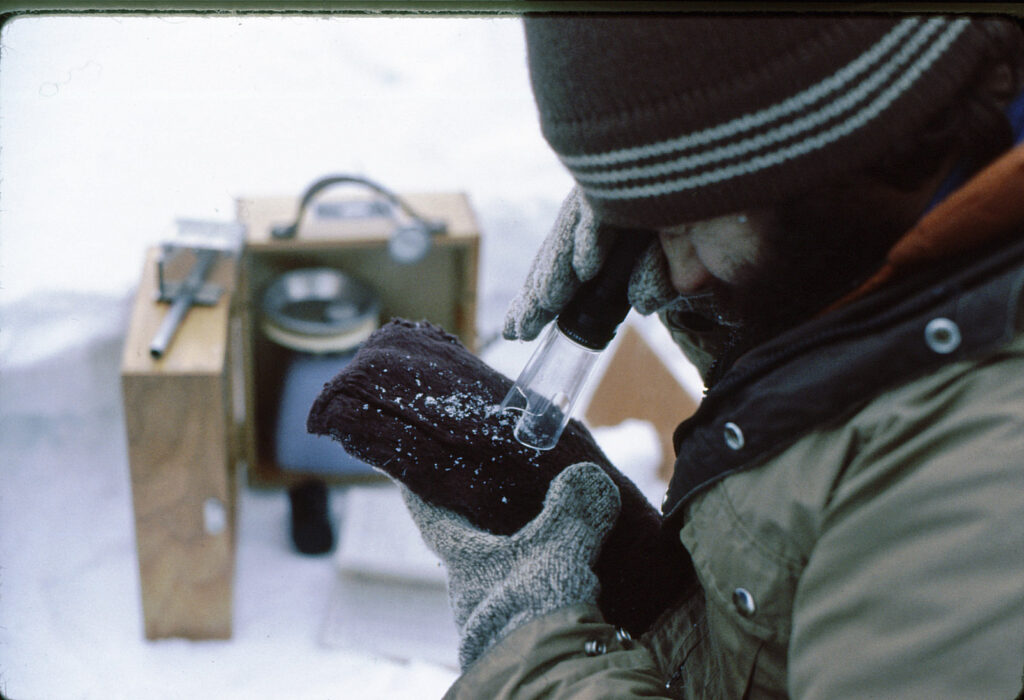
In the mid-1970s, a collaboration was initiated between the Snoqualmie National Forest, Mount Rainier National Park, and the Seattle office of the National Weather Service. At the heart of it were researchers from the University of Washington—most notably snow scientist Ed LaChapelle and graduate students Mark Moore and Rich Marriott.
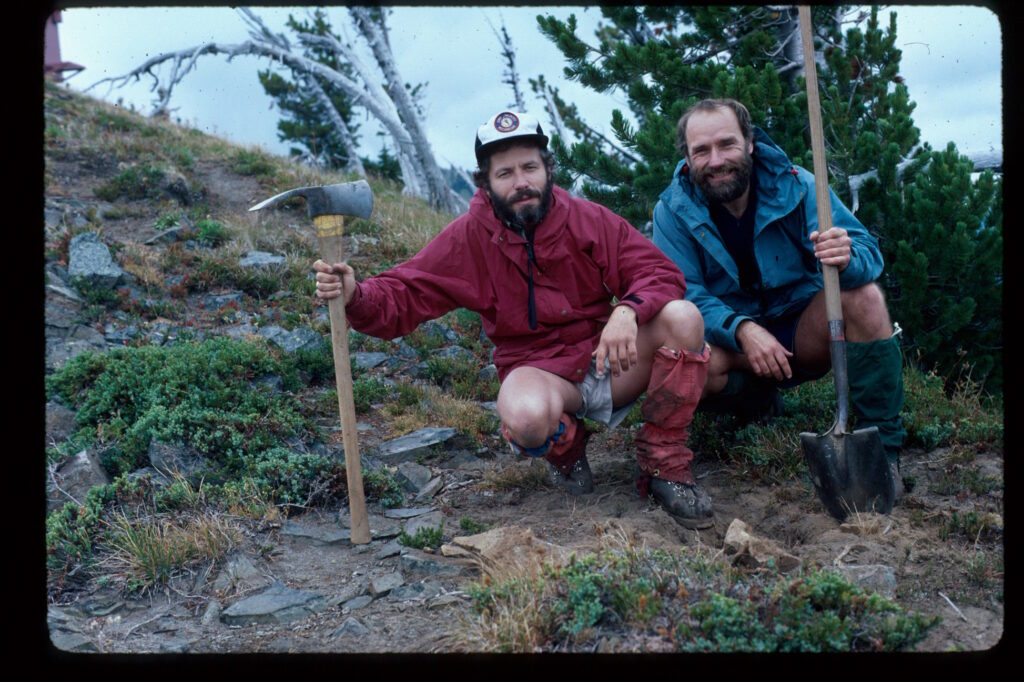
Their mission: develop a practical avalanche forecasting program for use in highway operations, particularly on I-90 and the newly opened North Cascades Highway. These roads were critical for regional transportation, but also vulnerable to deadly avalanches.
December 6, 1975: NWAC’s First Forecast
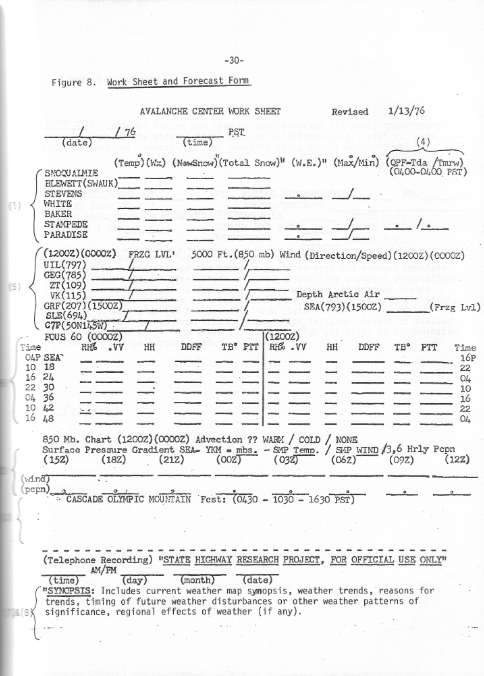
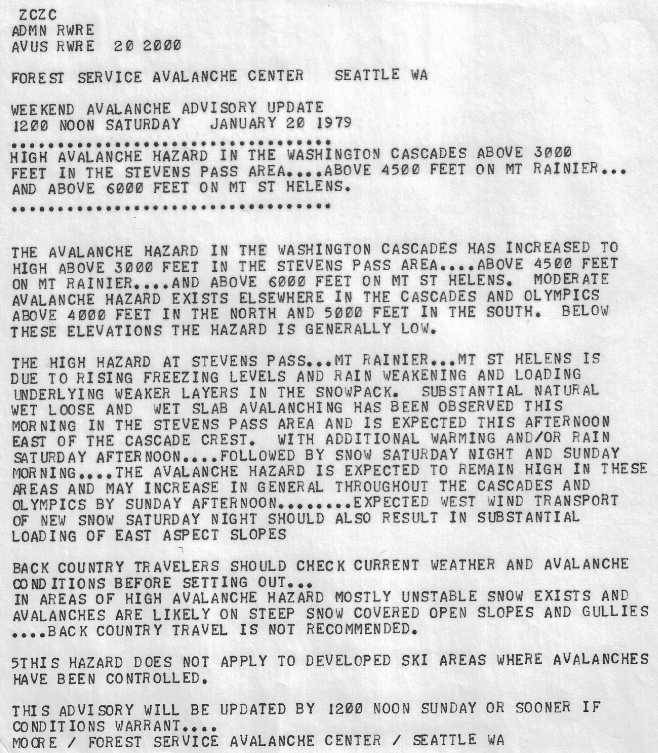
What began as a temporary research initiative evolved into a fully operational program. On December 6, 1975, NWAC issued its first official backcountry avalanche forecast, becoming the second program of its kind in the U.S. (following Colorado’s CAIC in 1973).
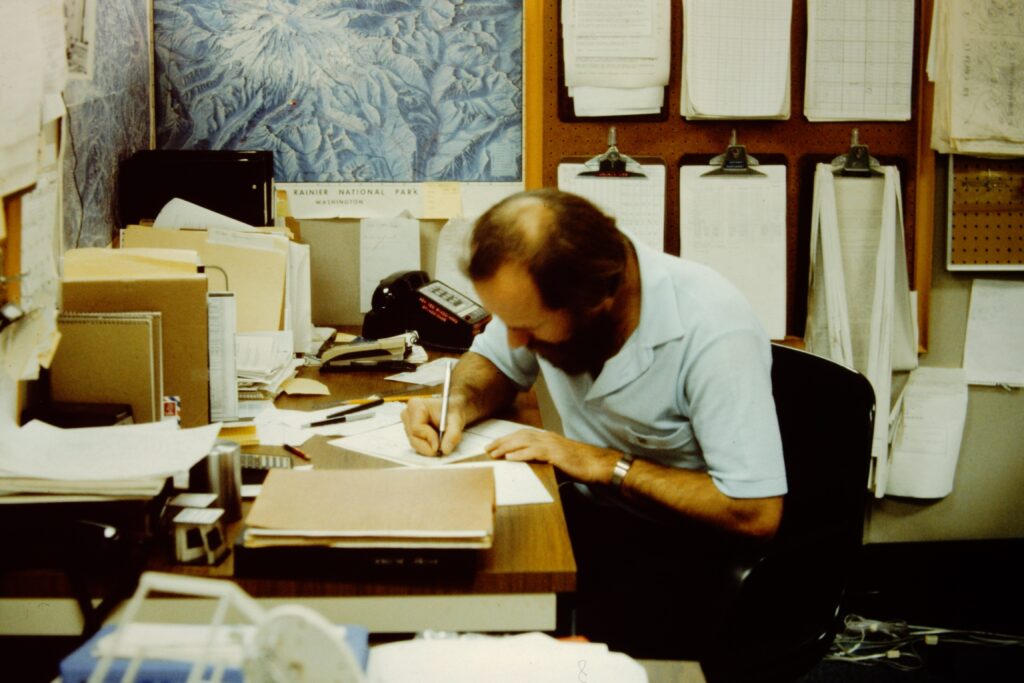
Rich and Mark, still graduate students, formed the heart of the effort. They partnered with Ed and Bud to issue forecasts, build instrumentation, and engage with local and federal agencies.
NWAC Takes Shape: The Late 1970s and 1980s
By 1978, NWAC entered a new phase through a cooperative agreement between the Forest Service, National Weather Service, WSDOT, and the National Park Service. Roland “Em” Emetaz was the strong advocate that NWAC needed to get off the ground with the Forest Service. This allowed for cost-sharing and formalized the program’s administration under the Forest Service’s Pacific Northwest Regional Office.
In these early years, NWAC operated with:
- Two full-time professional meteorologists
- One seasonal meteorologist
- One student intern
- Support from multiple agency partners
The original NWAC team (in the 70s and 80s) included:
- Mark Moore
- Rich Marriott
- Sue Ferguson
- Phil Taylor
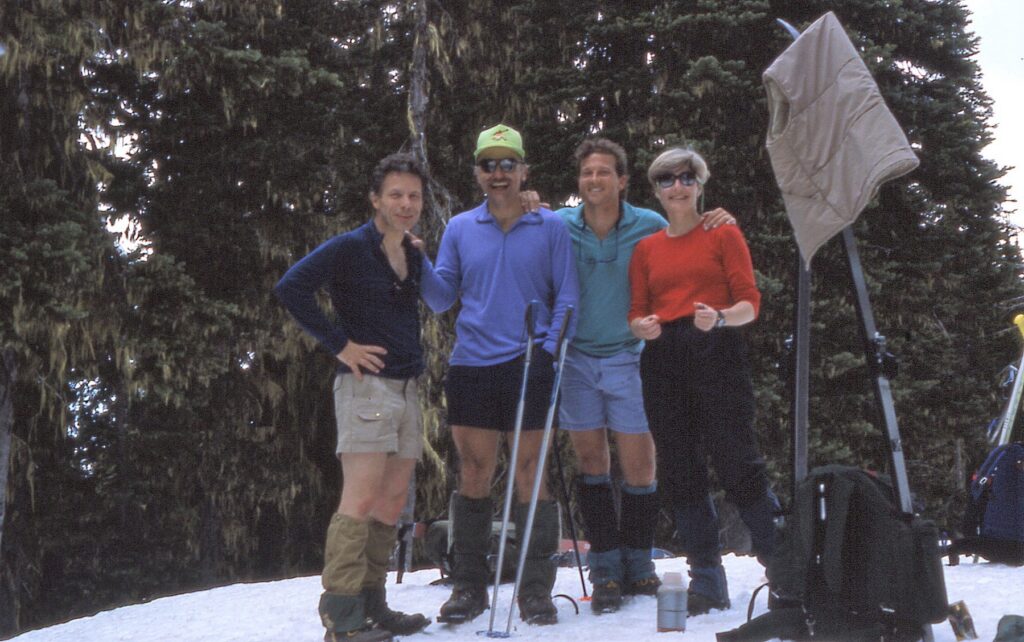
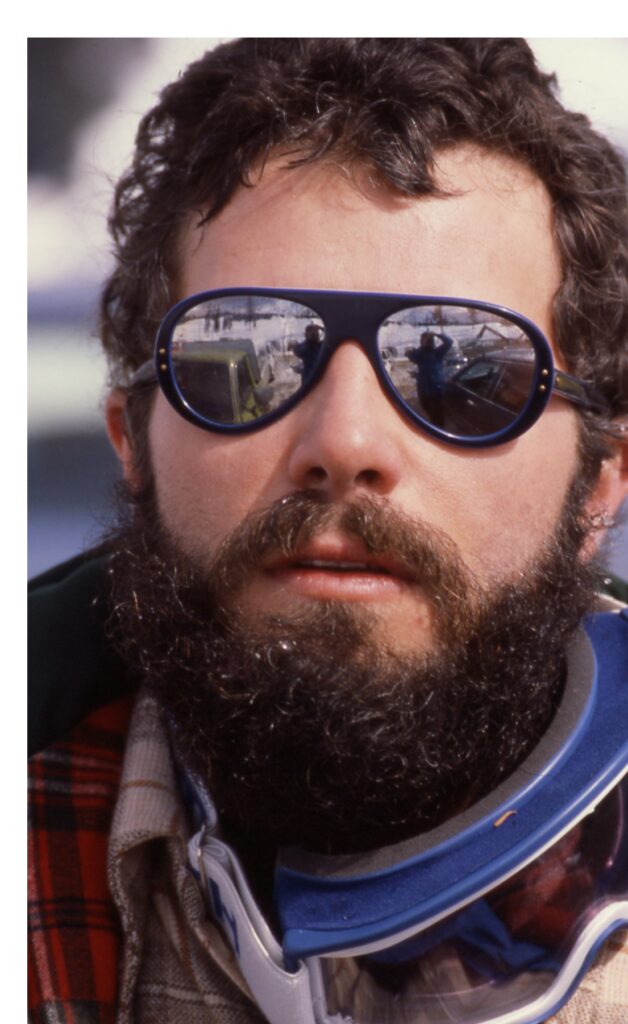
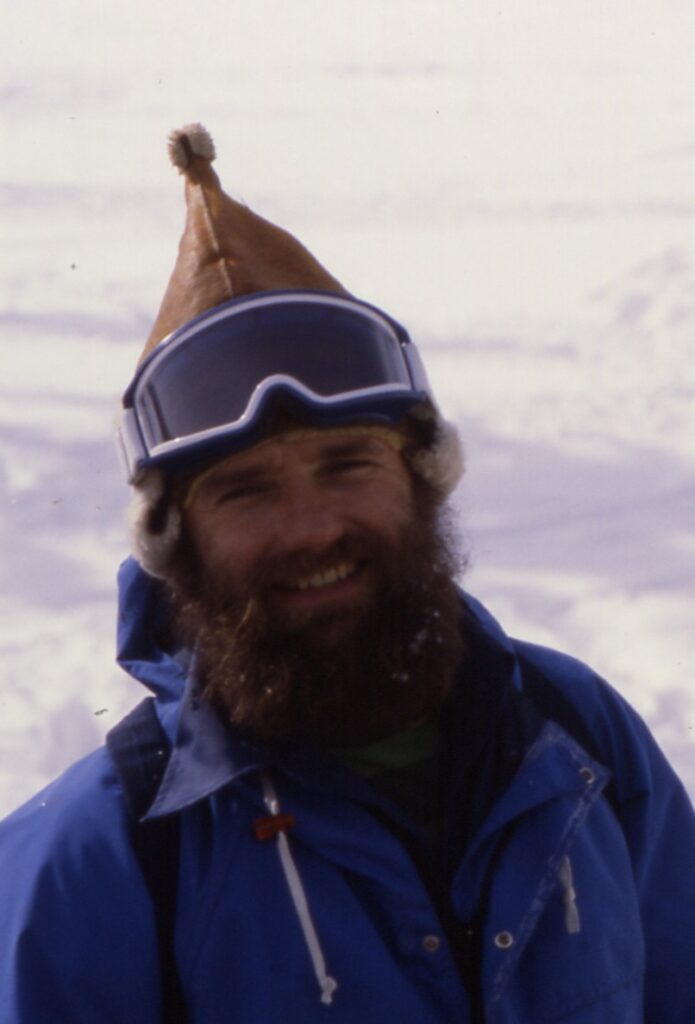
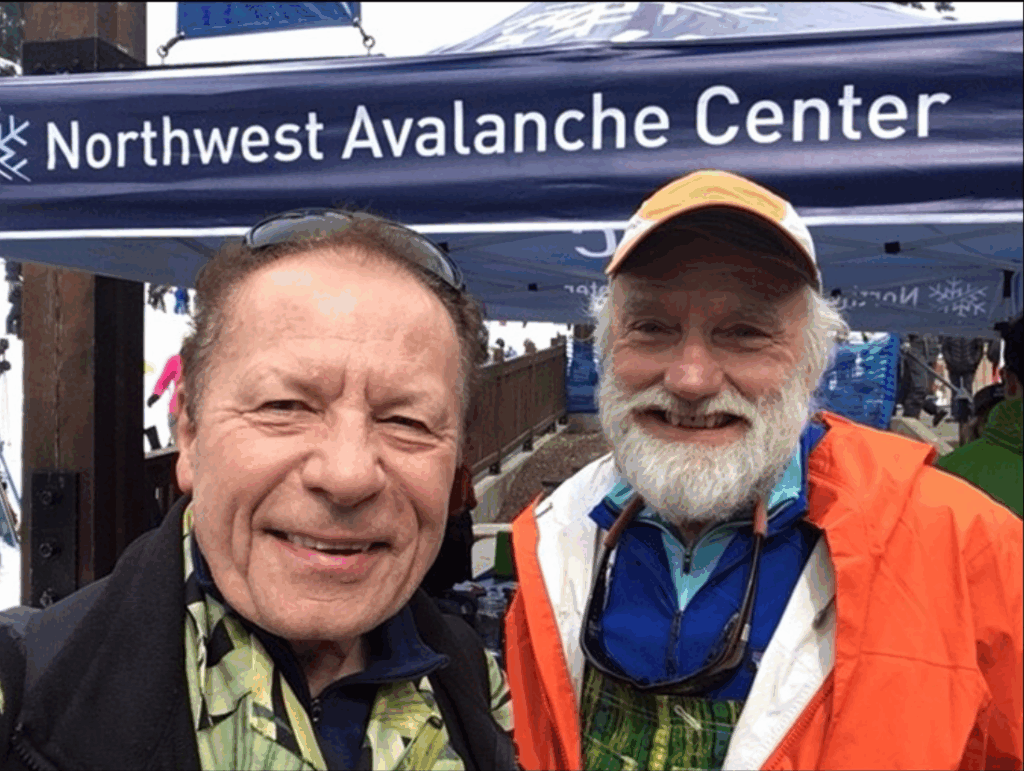
Mark and Rich were the original sparks for NWAC. They built the program from the ground up, encompassing relationships, forecasts, and equipment. Mark steered NWAC for his entire career (beginning in 1975 and retiring in 2012), championing the center and making it into what it is today. Rich branched off to begin a long, successful broadcast meteorology career in the Puget Sound area. (You might recognize Rich from his over three decades on TV as a meteorologist for KING 5 News.) Several forecasters would leave their impression on NWAC with multi-year stints, including Pam Speers Hays and Sue Ferguson.
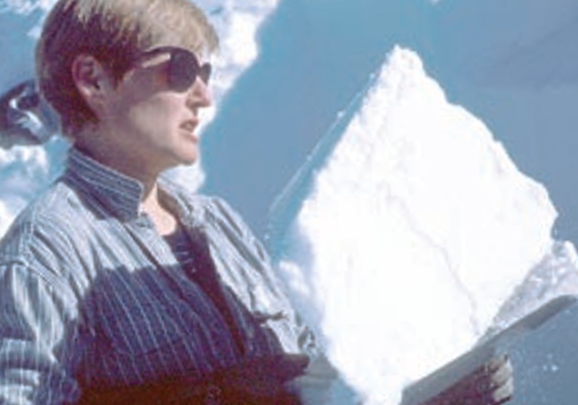
Sue received a BS in physics from the University of Massachusetts and a PhD in Geophysics and Atmospheric Sciences from the University of Washington, where she was mentored by Ed LaChapelle. Sue was Director of the Utah Avalanche Center from 1984 to 1986, and an avalanche meteorologist at NWAC from 1986 to 1992. In addition to academic contributions in snow science, she published instructional books on glaciers and avalanches, and helped found The Avalanche Review. She was also instrumental in founding the American Avalanche Association. Sue was a beloved and influential member of the snow and fire communities until she tragically lost a fight with cancer in 2005. Mark Moore wrote a tribute to Sue in April 2006, saying, “Upon arriving at the Northwest Avalanche Center, she lost no time in putting her mark on the operation and on what she felt were the best ways were for logging data and getting information. She was precocious and a quick learner and she had a great ability to gain a broad and reasoned perspective on whatever task she took upon herself to discover.”
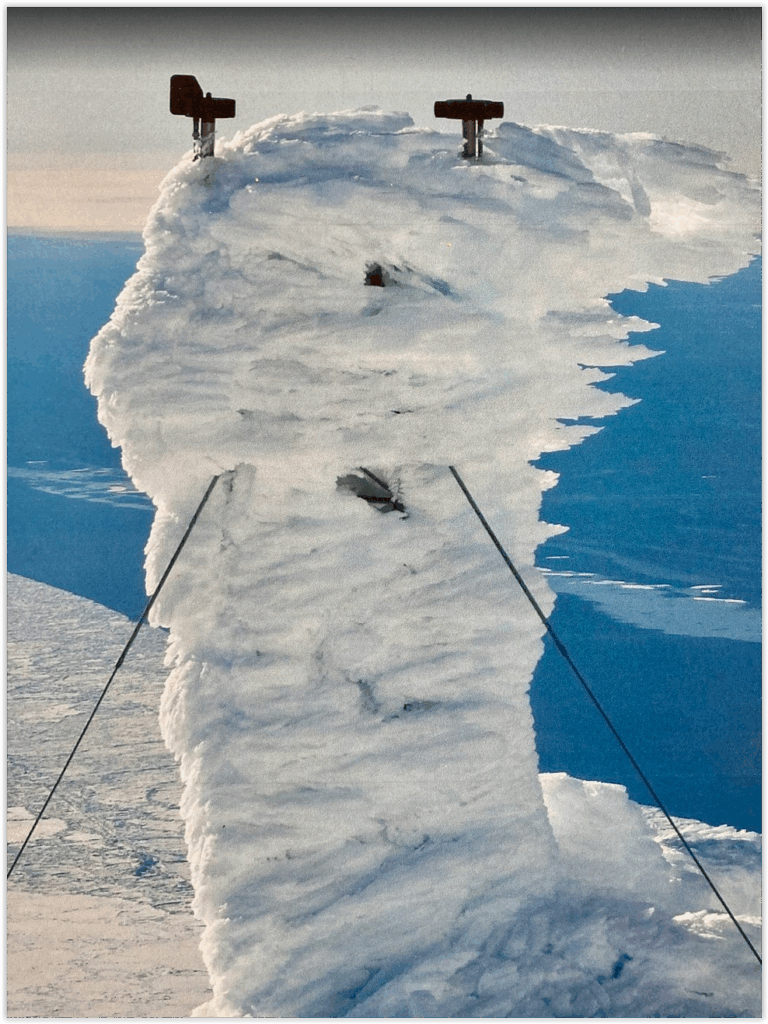
While not a forecaster, we cannot discuss NWAC’s success and durability over the decades without mentioning Phil Taylor. A local Seattle area engineer who first met Mark and Rich at UW in the 70s, Phil developed, tested, and built many of the wind instruments, snow boards, and other mountain weather measuring equipment still used by NWAC today. Phil’s wind instruments can be found around the Cascades, but also on more distant peaks with the nastiest weather. He spent countless hours with NWAC and other snow professionals in the snow, on the phone, and in his basement workshop, developing equipment designed to withstand the harsh conditions of the PNW. Andy Harrington, current NWAC Avalanche Forecaster, wrote in a recent tribute to Phil, “To say that his contributions to our industry are overlooked would be an understatement. Although never in the spotlight, he worked closely with some of the pioneers of our industry to create instrumentation that helps us all perform our jobs better. The tools and guidance he provided over the years have allowed so many of us to better understand factors that contribute to avalanches in the mountains.”
Innovation on a Shoestring
Without modern budgets or tools, early NWAC staff often built and repaired their own weather instruments.
“We had to lease a [phone] line between Seattle and Stevens Pass,” Mark recalled. “We had our own line for feeding information all the time,” plus a rudimentary modem to decode weather data sent via chairlift, by phone line, to the NWAC office.
When things broke—and they often did—the solutions were just as creative:
- A wad of Big Red chewing gum held a tipping-bucket precipitation gauge in place, in order to keep accurately measuring snowfall, as water, melted by a layer of heated oil.
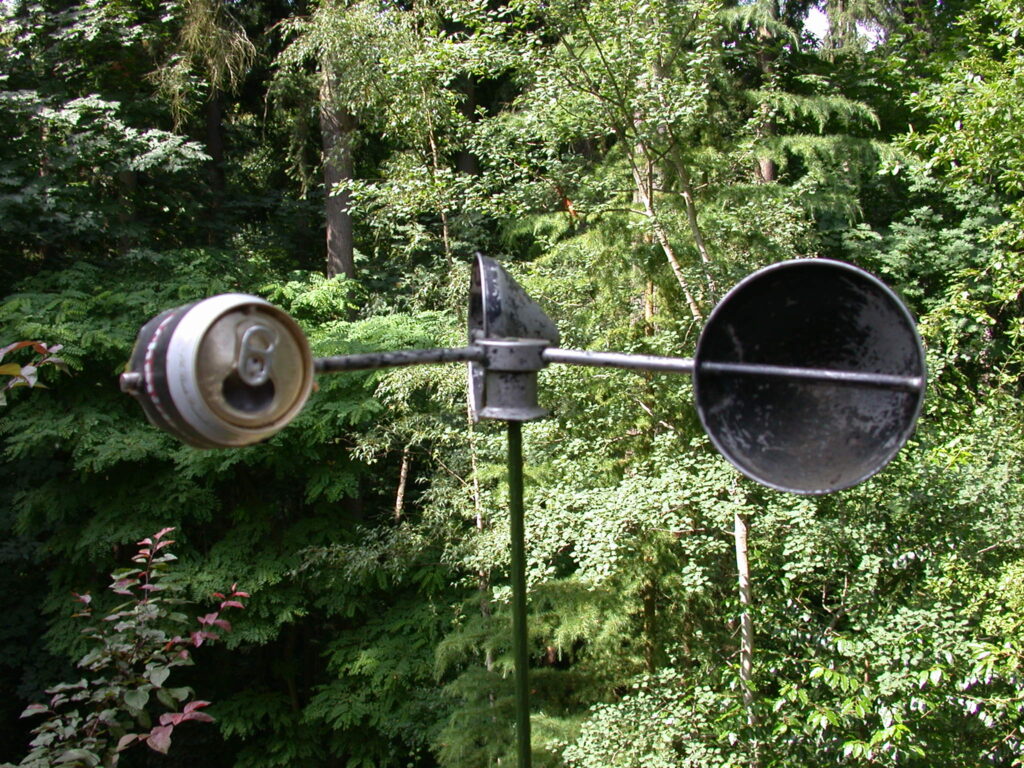
- A beer can cut in half replaced a lost anemometer cup so that wind data could still be collected.
Winning Over the Weather Service
When NWAC co-located with the Seattle National Weather Service office in 1978, not everyone was thrilled.
“The forecasters didn’t like us,” Rich joked. “Mark and I looked like we had just come out of the backcountry after two years—huge hair, huge beards. They wanted to have us deloused.”
But over time, NWAC’s high-quality mountain observations and growing data network proved invaluable. Even the most skeptical forecasters came to value the program. A huge part of that acceptance came from mentor Bud Reanier, then Deputy Meteorologist-in-Charge at NWS in Seattle, who believed in the program’s potential and helped integrate NWAC into the forecasting community.
Expansion and Professionalization: 1990s – 2000s
For decades, NWAC operated with a core team of three forecasters, steadily refining their forecasting techniques and expanding their mountain weather station network.
In 1999, the nonprofit Friends of the Northwest Weather and Avalanche Center was founded to support the center’s growing public education and fundraising needs. This community-driven nonprofit would eventually merge with the Forest Service’s NWAC operations under a unified umbrella.
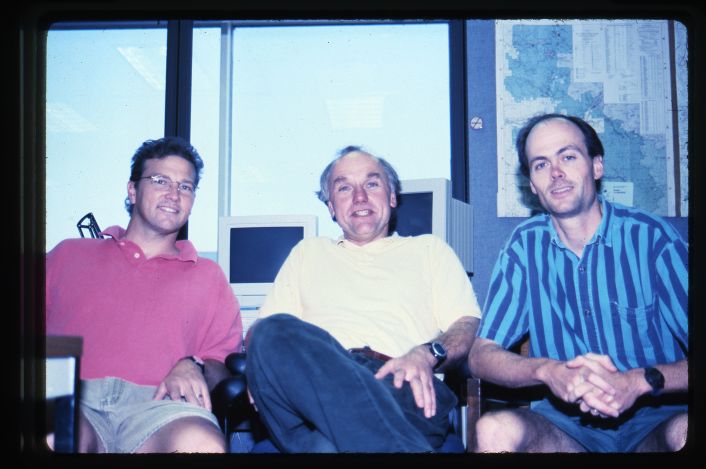
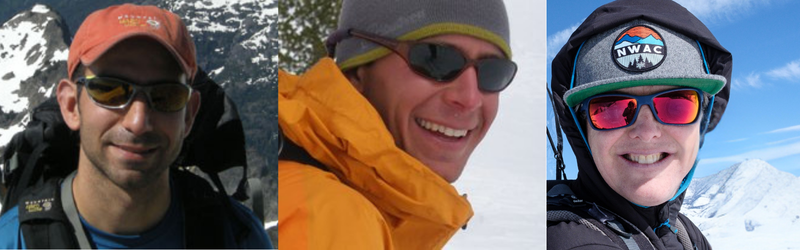
Along with Mark, two forecasters would form NWAC’s backbone for nearly 30 years: Kenny Kramer (at NWAC from 1989 to 2019) and Garth Ferber (at NWAC from 1993 to 2016). Garth’s quiet and steady demeanor was the same whether he was behind the forecast desk or scaling mountains around the world. Garth took a lead role in NWAC’s weather station program during the later stages of his career, providing mentorship to NWAC’s newer generation that extended well beyond his retirement date. Kenny became NWAC’s Forecast Director in 2013. Kenny’s weather and avalanche forecasting prowess were well known, but belied his true love for beachy locales and surfing. Kenny, along with Scott Schell, NWAC’s Non-Profit Executive Director, Dennis D’Amico, NWAC’s current Forecast Director, and Simon Trautman, now the Director of the National Avalanche Center, would lay the groundwork for NWAC’s transition and expansion during the 2010s as backcountry use surged and technology changed rapidly.
In 2013, NWAC expanded with a field-based professional observer program of six, including Dallas Glass, NWAC’s current Forecast Deputy Director. And in 2017, NWAC began a steady, almost yearly, growth of field and community-based avalanche forecasters, growing from its historical baseline of 3 meteorologists to 11 total forecasters, scattered from Bellingham to Hood River and Seattle to Leavenworth.
Today: A Center of Innovation & Impact
NWAC now operates with:
- 11 USFS seasonal forecasters
- 6 full-time nonprofit staff
- 16-member Board of Directors
- 4,000+ members who provide over $500,000 in support each year
- 150 volunteers who donate their time and talents
- A growing network of 35 community instructors
- A mission to provide essential forecasts, impactful education, and timely data
Together, we’ve built:
- 53 remote weather stations
- A user-friendly avalanche forecast app (Avy)
- A refreshed, mobile-optimized website (coming in 2026-27!)
- Hundreds of free and low-cost education classes offered annually
And we’ve done it with support from long-standing partners:
- US Forest Service
- WSDOT
- National Park Service
- National Weather Service
- Washington State Parks
- Pacific Northwest Ski Area Association
- Our dedicated corporate sponsors
- And most importantly, you, our community
Looking Ahead
From chewing gum fixes in the field to high-tech modeling and smartphone forecasts, NWAC has never stopped innovating. We’ve gone from two young scientists scraping together an avalanche forecast to a center issuing over 1,300 forecasts annually, educating thousands of backcountry users, and garnering millions of dollars in community support over the years. As more and more people explore the backcountry, our mission is more vital than ever.
NWAC is a reflection of the Pacific Northwest community—resilient, resourceful, and committed to each other’s safety. As we celebrate 50 years, we honor the people who built this program, the partners who kept it going, and the public who embraced it.
As we look toward the next 50 years, we remain grounded in the belief that informed recreation saves lives. Whether you’re skinning up a quiet ridge, driving a snow-covered highway, or teaching others about avalanche safety, you’re part of NWAC’s story. We’re proud of our past. We’re grateful for your support. And we’re excited for the next 50 years.